


A Gift of Remembrance
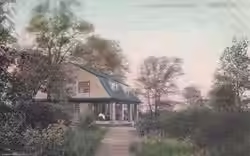
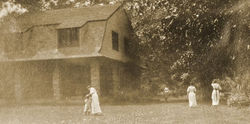
The story of Lowell Park began with a profound act of generosity. In 1907, Carlotta Lowell donated 200 acres of pristine woodland to the City of Dixon to honor her parents, Charles Russell and Josephine Shaw Lowell. Her vision was that the land be maintained forever as a "naturalistic park" for public benefit. This gift predates the Illinois State Park system and established Dixon as a leader in public land preservation.
 |  |  |  |  |  |
|---|
A Masterpiece of the Prairie Style
Lowell Park is recognized on the National Register of Historic Places as a collaborative masterwork of the nation’s most influential landscape architects.
When the Lowell family donated this land in 1907, they sought the expertise of the Olmsted Brothers, whose lineage defined American landscape design.
They commissioned Arthur C. Comey to live on-site for two years, translating the park’s raw potential into a structured reality. Comey’s vision established the park’s DNA, from the graceful curl of the roads to the strategic placement of the Pinetum and well house, ensuring that every man-made feature felt like an extension of the earth itself.
The park's evolution continued under Ossian Cole Simonds, a founding father of the American Society of Landscape Architects. Simonds elevated the design by emphasizing the site’s natural drama. His signature "long views," native plantings, and hidden ravines were intentional artistic choices designed to immerse visitors in the tranquil, rugged beauty of the Rock River valley.

The Olmsted Legacy
From Central Park to Dixon
When the Lowell family donated this land in 1907, they sought a vision that matched the grandeur of the property, leading them to hire the world-renowned Olmsted Brothers. As the sons of Frederick Law Olmsted—the landscape genius who designed New York City’s Central Park and the U.S. Capitol Grounds—the brothers brought a gold standard of American design to our community. By applying the same "world-class" principles used in the nation’s most famous landmarks, they ensured that Lowell Park would feel like a grand, national treasure preserved right here in Dixon.
Arthur Comey
A Visionary from Harvard
To translate their grand vision into reality, the Olmsteds sent Arthur C. Comey, a brilliant Harvard protégé, to live in Dixon for two years and personally oversee the park’s birth. Comey, who later became a legendary professor at Harvard and a consultant for the National Park Service, used his time here to hand-pick the locations for our winding roads and the Pinetum. He applied the same meticulous design principles found in the country’s most prestigious campuses and national reserves, establishing the foundational "DNA" that makes our park so unique today.


O.C. Simonds
The Architect of
the Rock River Valley
Lowell Park is officially recognized on the National Register of Historic Places as a masterwork of Ossian Cole Simonds, a "Founding Father" of the American Society of Landscape Architects. If you have ever marveled at the beauty of Chicago’s Lincoln Park or the Morton Arboretum, you have experienced the artistry of Simonds. He designed Lowell Park to be an immersive "art gallery of nature," using hidden ravines and sweeping "long views" to highlight the tranquil, rugged beauty of the Rock River Valley in a way that feels both wild and intentional.


The Pinetum:
A Living Collection
One of the park’s most distinctive botanical features is the Pinetum. Established early in the park’s development, this curated stand of diverse pine species serves as a "living museum" of evergreens. It provides a unique ecological microclimate and a year-round visual anchor for the park, reflecting the early 20th-century commitment to both forestry and aesthetic beauty.


The 1909 Vision:
"A Love for Nature"
Just two years after the gift, landscape architect Arthur Comey identified the park’s true purpose. He famously noted that the park "affords excellent opportunity for nature study" and recommended the "cultivating of a love for nature." He believed that moving people out of their daily surroundings and into a "healthy outdoor life" had a "refining influence" on the soul.
Fulfilling the Dream:
The Ruth Edwards Nature Center
In 1976, Arthur Comey’s 1909 recommendation finally took physical form. The Kiwanis Club of Dixon, supported by local businesses and volunteers, built the Nature Center to provide a permanent home for "nature study." Named for the dedicated educator Ruth Edwards, the center now carries the torch of Comey’s vision, ensuring that every visitor can find that "refining influence" through our modern programs, scavenger hunts, and community science.
Presidential
Legacy
(1927–1932)
Lowell Park served as the formative training ground for future President Ronald Reagan. During his six summers as a lifeguard, Reagan spent thousands of hours immersed in the park’s ecosystem. He often spoke of how the "rugged beauty" of the Rock River and the discipline of the outdoors shaped his character and his future commitment to American conservation.


learn more
Uncover the blueprints of Lowell Park at the Ruth Edwards Nature Center. Our physical collection offers a rare look at the original correspondence, architectural drawings, and archival photography that shaped our grounds. Complementing these physical archives, we are proud to feature a digital retrospective authored by Tom Wadsworth, detailing the rich history of the Dixon Park District’s crown jewel.
